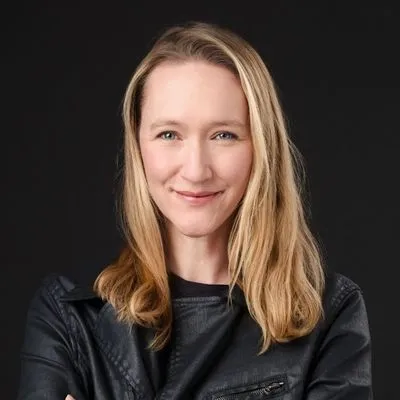
 By
By Wildest career experience
After almost 14 years at Google, I had experienced a lot: the scale, the complexity, the perks, and the politics. But the moment that truly shook me (the one that eventually pushed me out of big tech) was when I realized that a company can lose its ability to see its people as people.
By 2020, I was leading global education programs for Google's mobile products. I oversaw the curriculum and marketing for training programs used by millions each year, helping people grow their skills and get certified. My team was distributed across India, London, and the U.S., and I had been working remotely from Alaska (yes, Alaska!) since 2014. I was already living the remote work reality and knew firsthand how effective it could be, especially when managing global teams.
Then the pandemic hit. While many companies were figuring out how to adapt, Google began locking in return-to-office policies. I was told I would need to relocate to New York City, even though I had never worked from that office and none of my team was based there.
It didn’t make sense. My manager backed me. Even my SVP agreed that the policy didn’t apply to my role. But HR held firm. They insisted I sign a document committing to move once the office officially reopened.
After 14 years of high performance, constant growth, and impact, it became clear. I was just a checkbox in the system. It didn’t matter how well I was doing or how much support I had. The policy said move, which would not have been the right decision for me, my family, or my life.
All of a sudden, something became abundantly clear.
I realized I wanted to be somewhere that valued humans over headcount rules. Somewhere that could move fast and think differently. So I made the jump from a comfortable, established role in big tech to the unpredictable, low-salary, high-stakes chaos of startup life.
Yes, it was a huge leap. But honestly, what felt riskier was staying in a system that saw me as a checkbox instead of a leader doing great work.
Rant
In tech, especially in startups, we have glorified the wrong marker of success for way too long.
For years, “getting funded” was treated as the holy grail. You raise a round? You’ve made it. You land some big-name VCs? You must be the next big thing. But time and time again, we have seen how flawed that thinking really is.
VC money doesn’t mean product-market fit.
It doesn’t mean you are solving a real problem.
And it definitely doesn’t mean your business is sustainable.
I have worked at startups on all sides of this. The well-funded with no clear path, the bootstrapped and scrappy, the vision-driven companies that over-promise and under-build. And what I have seen, over and over again, is that funding often fuels dysfunction. Companies raise a big round, then hire too fast. They build features no one asked for, lose focus, and end up in the inevitable fire-firing cycle. All because they were chasing the illusion of growth, not actual traction.
Even now, in a tighter funding environment, I still see founders spinning a vision instead of building a product. Especially in the AI space. It’s all talk. "AI-powered" when it's really just straightforward algorithms or basic machine learning. I have been on both sides of that, too. I have even sold the vision before a product was ready. I know how the game works.
And I’m tired of it.
We need to stop treating funding as the finish line and start rewarding companies that are actually building something that works. Give me a slow, steady, profitable company that solves a real need over a flashy demo and a billion-dollar deck any day.
When we built Wednesday Women, I sat down and re-evaluated a dozen community platforms. I asked every one of them: show me the actual features in your product powered by AI. Most of them answered with their CEO’s “vision.” Only a few could show me the real, functioning tools their product teams had actually built. And guess what? Those were the ones worth working with. You can always tell who is really building and who is just pitching.
And even though I’m a marketer by trade, I think we, as marketers, have a core responsibility in all of this. We cannot just peddle hype. We have to understand what the product actually does before we figure out how to position it. It is our job to bridge the gap between what is being built and what really works for the customer. Not just sell the idea of value, but deliver on it.
So here is what needs to change.
Let’s stop chasing hype. Let’s stop celebrating funding as success.
Let’s build things that matter, that work, and that last.
Useful advice
The most important advice I give (and follow) is this: build your network before you need it.
Too often, we think of “networking” as something salesy and transactional. Like you should be out shaking hands, collecting business cards, and pitching yourself at every opportunity. It feels inauthentic, and frankly, kind of exhausting.
But I don’t think about it that way at all.
Building your network is about connection, not conversion. It’s about being curious. Investing time with people doing interesting things. Having meaningful conversations, even when you don’t “need” anything. Especially then.
There’s a quote I love from Kaivona Parker:
“Network when you’re full, not when you’re hungry.”
Whether you are building a company, exploring your next move, or just trying to stay sharp, your network is the best asset you can cultivate. And you should be doing so, especially when things are going well.
I have seen it play out every single time. Introductions lead to opportunities, friends turn into collaborators, and everyone you meet has the potential to help you think differently.
Here's the kicker: When you (eventually) do need something - a referral, a connection, a sanity check - you will already have a foundation of trust and goodwill. Because you have been showing up for others long before you asked for anything in return.
If you are working remotely, this lesson is even more critical. Those casual hallway moments do not happen, so it is on you to stay connected to the world beyond your daily to-do list. And if you are early in your career? Start now. It is one of the best long-term investments you can make.
I believe in this so deeply that I host a podcast called The Joy of Connecting — just for fun, on the side — where we talk with people about how connection has shaped their careers, communities, and lives. It started as a creative outlet at my last company, but it has become a passion project that continues to fuel me. It is also a huge part of what we build inside Wednesday Women, where connection is the foundation for executive leadership.
So yes, be intentional. Book those coffee chats. Drop the check-in DMs. Say yes to the random intro. You do not need a reason beyond, “I’d love to learn more about what you’re working on.”
Build your network whenever, wherever you are in your career. It always pays off, and it's also just a lot of fun.